

From Data Silos to Digital Product Passports: How DataPool™ Transforms Quality Intelligence in Metal Processing
): Industry 4.0 Quality Intelligence Platform for Metal Processing | SpechtLab DataPool™
3/25/20264 min read
From Data Silos to Digital Product Passports: How DataPool™ Transforms Quality Intelligence in Metal Processing
Why the next competitive frontier in metal processing is not what you measure — it is what you do with the data
By SpechtLab Editorial
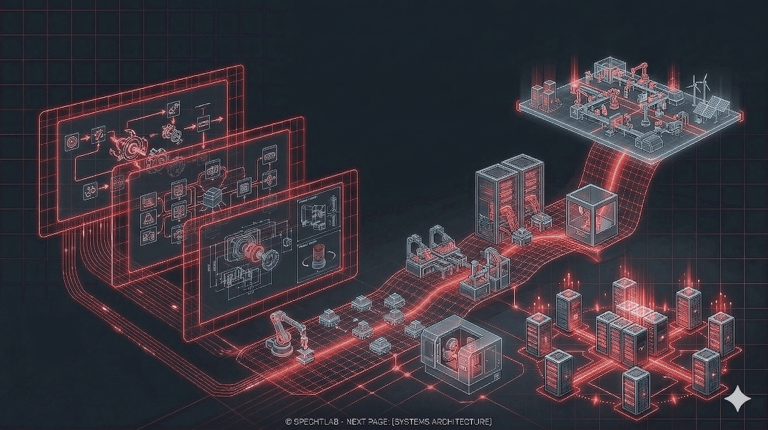
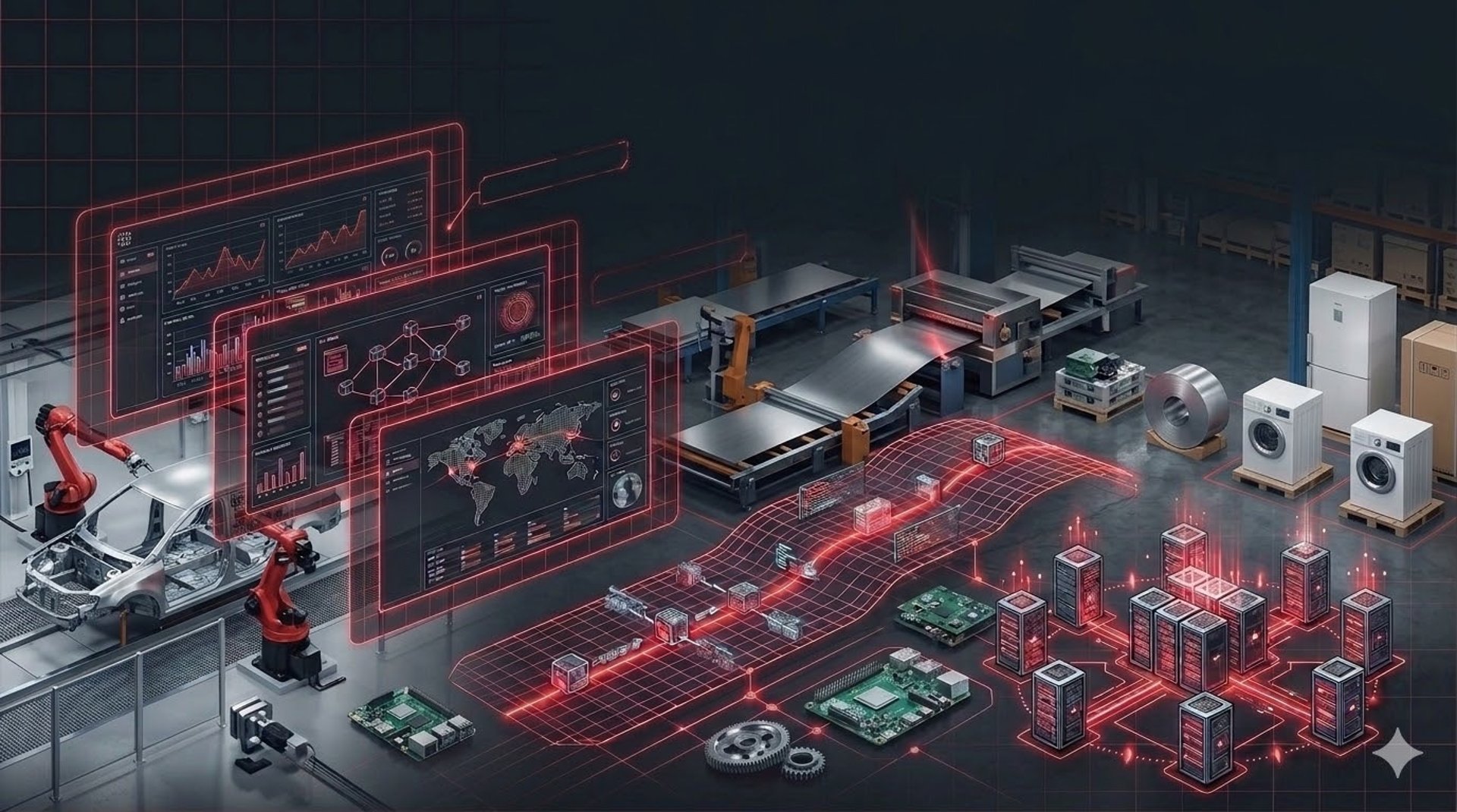
Most metal processing plants already have sensors. Width gauges, surface inspection cameras, thickness gauges, temperature pyrometers — the average hot rolling mill has 40–120 measurement points generating data continuously. The problem is not a shortage of data. The problem is that the data lives in silos: the surface inspection system archives to its own hard drive, the width gauge sends a signal to the drive control, the laboratory results sit in an Excel sheet on a metallurgist's desktop, and the customer complaint data is in the CRM system.
No one has a complete view of quality. And because no one has a complete view, no one can close the loop between what the sensor sees in real time and what the customer experiences six weeks after shipment. SpechtLab DataPool™ was built to change that architecture.
The DataPool™ Architecture: Connecting the Quality Ecosystem
DataPool™ functions as a universal quality intelligence hub. It ingests data from any measurement source — SpechtLab sensors or third-party systems — via OPC-UA, MQTT, Modbus TCP, REST API, and CSV file import. It enriches raw sensor data with material identity (via integrated OCR coil ID reading or barcode scanning), production context (from the mill's Level-2 automation via OPC-UA), and order data (from SAP or MES via REST RFC connector).
The result is a unified quality timeline for every coil, plate, or product — a chronological record that answers the question: 'What did every sensor measure on this specific material, at every point in its production journey?' That record is the foundation of the Digital Product Passport.
DataPool™ is deployed as an on-premise industrial server application running on standard Tier-1 server hardware, with optional cloud synchronisation for multi-site reporting. It requires no cloud connectivity for core operation — a deliberate design choice for plants with strict network security requirements.
The Digital Product Passport: From Regulatory Compliance to Competitive Advantage
The EU Battery Regulation (2023/1542), effective from February 2027 for large industrial batteries and EV batteries, mandates that each battery cell carries a digital record of the materials used in its production, including the provenance and quality certification of the electrode foil. For aluminium and copper foil processors supplying the battery supply chain, this is not optional.
DataPool™ generates a conformant Digital Product Passport for each coil automatically — not as a post-production reporting exercise but as a continuous, real-time by-product of the quality measurement process. Every EdgeCut Vision AI edge measurement, every WG Series width reading, every BL Series surface defect record is appended to the coil's DPP as it is produced, not transcribed manually afterward.
Beyond regulatory compliance, the DPP becomes a commercial differentiator. Automotive OEMs and electronics manufacturers are actively selecting suppliers who can provide structured, machine-readable quality data at coil level. Processors who can deliver this capability win qualification opportunities that are closed to suppliers still operating paper-based quality systems.
AI-Powered Anomaly Detection: Closing the Predictive Gap
The most powerful capability DataPool™ enables is not reporting what happened — it is predicting what is about to happen. The DataPool™ AI engine trains on historical multi-sensor data to identify anomaly patterns that precede quality failures.
A concrete example: analysis of 18 months of combined width gauge, edge inspection, and drive current data at a cold rolling mill revealed that a combination of three simultaneous signals — width deviation exceeding +0.25 mm, edge waviness amplitude above 0.3 mm, and main drive current increasing by >3% — preceded every strip break by 75–120 seconds. None of these signals individually was diagnostic; their co-occurrence was. DataPool™ AI learned this pattern and began generating predictive alerts with 87% precision and 92% recall, enabling operators to reduce mill speed before the break rather than respond to it after.
This class of insight — cross-sensor, time-lagged, multi-variate — is impossible to derive from individual sensor dashboards. It requires a unified data substrate with historical depth and an ML inference layer trained on real production outcomes.
Predictive Maintenance: Quality Data as Maintenance Intelligence
DataPool™ repurposes quality measurement data as maintenance intelligence. Slitter blade wear manifests as gradual burr height increase in EdgeCut Vision AI data; roll surface degradation appears as systematic surface mark patterns in BL Series surface inspection data; roll bearing wear produces characteristic width oscillation signatures in WG Series data. DataPool™ monitors these trends continuously and triggers maintenance work orders in the plant CMMS (SAP PM, Maximo, or similar) before the degradation reaches quality-critical levels.
Plants implementing DataPool™-driven predictive maintenance report 40–65% reductions in unexpected production stoppages attributable to tooling and consumable degradation, and 15–25% extensions in average tooling life through optimised replacement scheduling.
Integration Landscape
DataPool™ integrates natively with SAP S/4HANA and SAP ECC via RFC and REST connectors, enabling quality hold and release workflows to be driven from DataPool™ without operator intervention in the ERP system. Integration with Siemens SIMATIC, ABB System 800xA, and Primetals Level-2 automation systems is available via OPC-UA and Modbus TCP. REST webhooks allow integration with any custom MES or quality management platform.
The system supports role-based access control with LDAP/Active Directory integration, enabling plant operators, quality managers, customer service teams, and executive dashboards to access the quality data layer with appropriate permissions from any browser-enabled device.
Frequently Asked Questions
Does DataPool™ work with non-SpechtLab sensors?
Yes. DataPool™ is sensor-agnostic. It ingests data from any measurement system that can communicate via OPC-UA, MQTT, Modbus TCP, or REST, including thickness gauges, temperature pyrometers, hardness testers, and laboratory test systems from all manufacturers.
How long does deployment take?
A standard single-line deployment — covering data ingestion, coil identity integration, basic quality reporting, and Level-2 connectivity — is completed in 5–10 working days. AI model training for anomaly detection requires 3–6 months of production data collection before predictive alerts become available.
Is the data stored on-premise or in the cloud?
By default, all data is stored on the plant's own server infrastructure. Optional encrypted cloud synchronisation to SpechtLab's EU-based data centre is available for multi-site reporting and backup.
What are the cybersecurity measures?
DataPool™ operates on a dedicated OT network segment with no internet-facing interfaces in the default configuration. All sensor communication uses encrypted OPC-UA with certificate authentication. The system complies with IEC 62443-2-1 OT security standards.
Data is not intelligence. Intelligence is data in context, over time, connected to outcomes. DataPool™ provides that context — and with it, the ability to predict quality failures, generate audit-ready traceability records, satisfy regulatory requirements, and deliver the machine-readable quality documentation that the next generation of industrial supply chains will demand. Contact SpechtLab to request a DataPool™ demonstration or architecture review for your plant.
Ready to see SpechtLab technology on your production line?
Contact us at www.spechtlab.com · info@spechtlab.com
AI - Powered Measuring Systems
info@spechtlab.com
© 2024. All rights reserved.