

Beyond Calipers: Why Laser Profile Measurement Is Becoming the New Standard in Precision Manufacturing
Laser Triangulation Profile Measurement Sensor 80µm Precision | SpechtLab PM Series
3/25/20264 min read
Beyond Calipers: Why Laser Profile Measurement Is Becoming the New Standard in Precision Manufacturing
Full cross-section geometry at 4,000 profiles per second — the case for laser triangulation in every dimension-critical production line
By SpechtLab Editorial
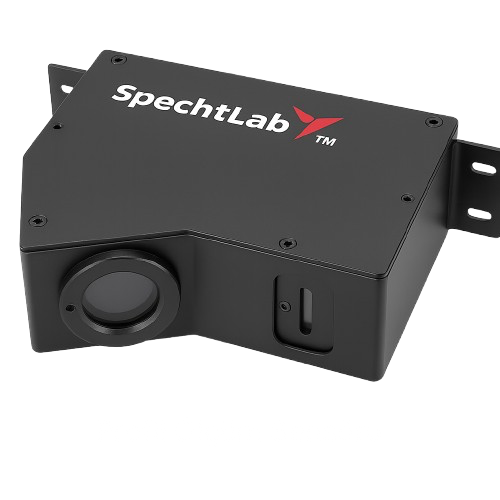
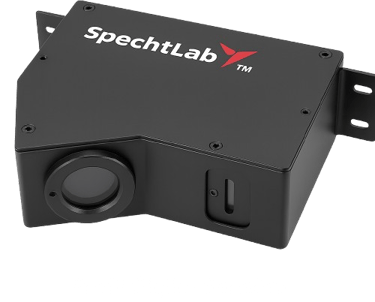
A contact caliper measures one dimension at one point at one moment. It requires a trained operator, a stopped part, and a calibrated instrument maintained to traceable standards. It produces a number, not a profile. And it misses everything that happens between the point where the gauge touched and the point where the gauge was not applied.
In a world where manufacturing tolerances are shrinking, cycle times are compressing, and quality management systems are demanding 100% dimensional records rather than statistical samples, the contact caliper is becoming an anachronism. The tool that is replacing it — in weld inspection, rail profiling, pipe measurement, flatness gauging, and machined-part verification — is the laser triangulation profile sensor. SpechtLab PM Series represents the current generation of this technology.
The Physics of Laser Triangulation Profiling
A laser triangulation sensor projects a line of laser light across the surface being measured. A high-resolution CMOS sensor, positioned at a known angle relative to the laser, images the reflected laser line. Where the surface is closer to the sensor, the laser line appears shifted in the image; where it is farther, it shifts in the opposite direction. By computing the shift at each pixel across the laser line, the sensor reconstructs a complete 2D height profile of the surface cross-section with every image capture.
The PM Series operates at up to 4,000 profiles per second, providing depth (Z-axis) resolution of 80 µm and lateral (X-axis) resolution of 0.1 mm across an 80 mm measurement field. At a conveyor speed of 0.5 m/s, this yields a longitudinal (Y-axis) sampling interval of 0.125 mm — providing effectively a 3D point cloud of the entire part surface when multiple profiles are combined.
Weld Bead Inspection: The Highest-Volume Application
Automated welding lines for structural steel — beams, frames, pressure vessels — require continuous verification that weld bead geometry meets the dimensional requirements of EN ISO 5817 or AWS D1.1. The critical measurements are bead height (reinforcement), bead width, undercut depth, and overlap — four parameters that a PM Series sensor measures simultaneously in a single scan across the weld.
The sensor mounts immediately behind the weld head on a motorised Z-axis that tracks the joint line. At 4,000 profiles/second and a typical welding speed of 500–800 mm/min, the system achieves longitudinal sampling every 2–3 mm along the weld — sufficient to detect local undercut events of under 5 mm length that would be missed by conventional sampling inspection.
The measurement data is output as a per-joint weld quality report compatible with EN 15085 railway vehicle documentation requirements and ASME Section IX weld records, enabling fully automated quality certification without manual measurement steps.
Rail Profile Wear: A High-Precision Maintenance Application
Railway maintenance authorities in 47 countries use rail profile measurement to schedule grinding and replacement before wear reaches the safety threshold defined in EN 13715. Conventional measurement methods — hand gauges, mechanical templates, and contact profilometers — are time-consuming, operator-dependent, and provide discrete point measurements rather than full profile data.
The PM Series, mounted on a track-inspection trolley or hi-rail vehicle, scans the rail head profile continuously at walking speed. The resulting profile is compared in real time to the nominal new-rail template, computing wear parameters including vertical wear, horizontal gauge-face wear, and head shape coefficient. The data is logged with GPS position, enabling mapping of wear distribution across entire line sections and optimising grinding train deployment.
Pipe and Tube Geometry: OD, Ovality, and End-Face Perpendicularity
API 5L, ASTM A106, and EN 10216 specifications for steel pipe and tube carry dimensional tolerances on outside diameter, ovality, and end-face perpendicularity that require full-perimeter profile measurement — not a single-point micrometer reading. A ring of three or four PM Series sensors arranged around the pipe circumference provides simultaneous measurement of the full outer profile in a single rotation of the pipe through the gauge ring.
The system computes outside diameter (minimum, maximum, mean), ovality (difference between maximum and minimum diameter), wall thickness eccentricity (when combined with ultrasonic wall thickness measurement), and end-face squareness. All parameters are logged against the pipe serial number for automatic certificate generation to API 5L PSL-2 specification.
Integration with Digital Manufacturing Systems
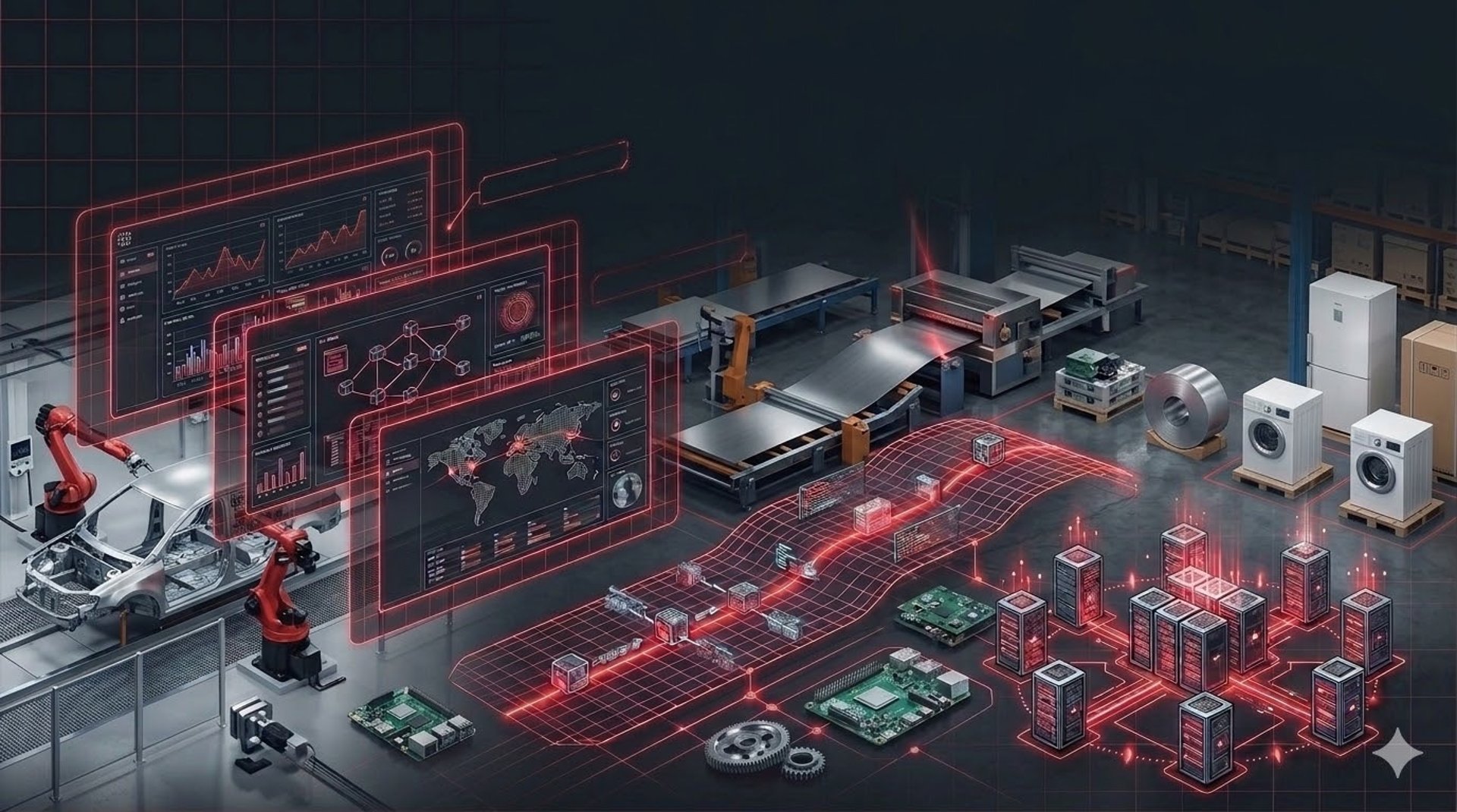
The PM Series is designed as a native Industry 4.0 sensor. Profile data is available via OPC-UA (server and client), Modbus TCP, and EtherNet/IP. A REST API provides integration with MES, ERP, and SpechtLab DataPool quality management systems. Each profile measurement can be linked to the part serial number, work order, operator ID, and production timestamp, creating a complete dimensional history record accessible in real time.
The sensor's embedded processing eliminates the need for an external PC in most applications. Measurement algorithms — bead geometry, profile comparison, diameter computation — run on the sensor's FPGA/ARM processing platform with configurable output at rates up to the sensor's 4,000 Hz native acquisition rate.
Frequently Asked Questions
What surface finishes can the PM Series measure?
The laser triangulation principle works on all metallic and most non-metallic surfaces. High-reflectivity mirror-finish surfaces (Ra < 0.1 µm) may require the diffuse-reflection variant with modified laser power and exposure settings, available as a factory option.
Can PM Series operate in high-ambient-light environments?
Yes. The sensor uses bandpass optical filtering matched to the laser wavelength, rejecting ambient light with an immunity level of 80,000 lux. Direct sunlight aimed at the sensor window may require supplementary shielding.
What is the warm-up time for calibrated measurements?
15 minutes from power-on to specified accuracy. A temperature compensation algorithm maintains calibrated performance across 10–40°C ambient temperature range without recalibration.
Every production process that ships to a dimensional specification has, somewhere in its quality workflow, a measurement step that is slower, less repeatable, and less informative than it needs to be. The PM Series replaces that step. Contact SpechtLab to discuss the specific profile measurement challenge on your production line.
Ready to see SpechtLab technology on your production line?
Contact us at www.spechtlab.com · info@spechtlab.com
AI - Powered Measuring Systems
info@spechtlab.com
© 2024. All rights reserved.